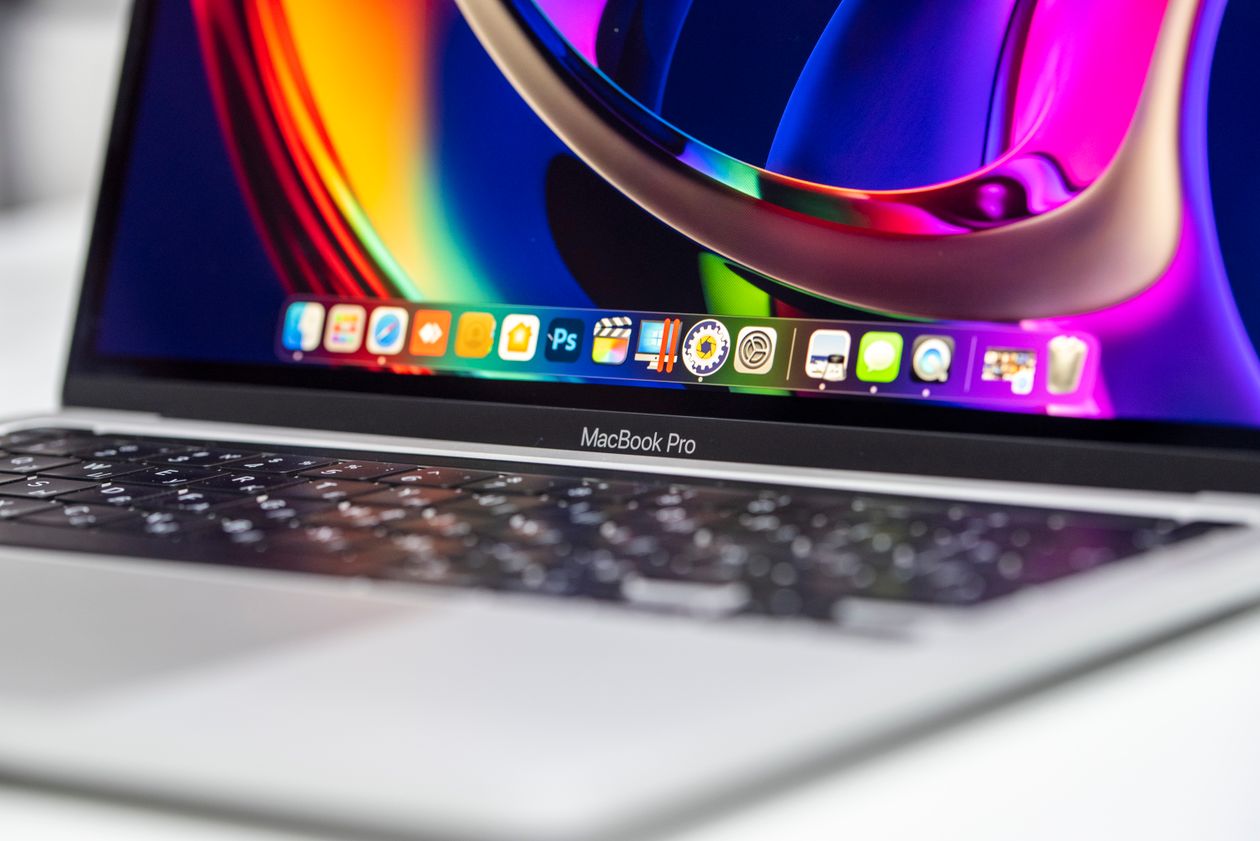
Look, I get it. You've been staring at your M4 Pro or Max MacBook Pro options since October, credit card hovering, wondering if you should just pull the trigger. The answer, for the first time in a while, is actually no. Wait a few more weeks.
Apple's M5 Pro and M5 Max MacBook Pros are coming, likely in mid-to-late February, and the rumoured performance gains aren't the usual incremental bumps we've learned to shrug at. This time, there's something genuinely interesting happening under the hood.
When Is This Actually Dropping?
The January 28th Apple Creator Studio launch came and went without hardware announcements, disappointing those of us who hoped Apple would pair its new $16.99/month creative software suite with machines powerful enough to actually run it properly. Classic Apple move, really.
The current smart money is on a macOS 26.3 tie-in release, which should land in the first half of February. Multiple reports suggest the M5 Pro/Max models will ship alongside this update to ensure full compatibility with new chip features. Mark Gurman's been consistently pointing to "early 2026" since last summer, and recent reports confirm mass production is underway.
There's also a telling sign on Apple.ca right now: delivery estimates for custom M4 Max configurations are stretching into late February and even March. That's usually Apple's way of clearing inventory before something new hits the shelves.
My best guess? Announcement around Valentine's Day, shipping by early March. Though knowing Apple, it could slip a few weeks.
The GPU Story Is Actually Worth Paying Attention To
Here's where it gets interesting. The base M5 chip that launched in October already posted some eyebrow-raising numbers. In Geekbench 6 Metal tests, the standard M5 hit around 76,727—a 35% jump over the M4's roughly 57,000. That's not nothing.
But the M5 Max? Estimates suggest it could break 250,000 on the Geekbench 6 Metal compute test, a score that would beat the 80-core M3 Ultra. Yes, a laptop chip potentially outperforming the most expensive silicon Apple sells. If that holds true, we're looking at GPU performance roughly equivalent to an RTX 4070—in a machine you can actually take to a coffee shop.
The CPU gains are solid if less dramatic: around 13-15% single-core improvement and 20-22% multi-core. The rumoured M5 Max multi-core score of approximately 31,000-32,000 puts it in the same postal code as AMD's Threadripper workstation chips. That's legitimately wild.
The Real Reason These Were Delayed
There's been a lot of speculation about why Apple split the M5 launch, dropping the base chip in October but holding back the Pro and Max variants until 2026. The answer appears to be a fundamentally new chip architecture.
According to reports, the M5 Pro and M5 Max will feature CPU and GPU on separate silicon blocks, connected using TSMC's SoIC-mH packaging technology. This is a significant departure from Apple's traditional system-on-a-chip approach, where everything sits on one monolithic die.
The potential upside? More flexible configurations. Imagine ordering an M5 Max with a modest CPU but a maxed-out GPU for 3D rendering work, or vice versa for compile-heavy development. Apple hasn't confirmed this customization will actually be available—they might use the technology purely for yield improvements and better thermal management—but even that alone would let these chips sustain higher performance longer without throttling.
Think of it like finally being able to order your poutine with extra cheese curds without getting extra fries. Sometimes you just want what you want.
What About AI Performance?
The base M5 already embeds a Neural Accelerator in each GPU core, which Apple claims delivers over 4x the peak GPU compute performance for AI workloads compared to the M4. The M5 Max, with up to 40 GPU cores, should scale that advantage substantially.
For anyone running local AI models—and in 2026, that's an increasingly relevant use case—this matters. The combination of higher memory bandwidth (rumoured at 400+ GB/s for the M5 Max), more unified memory capacity, and dedicated neural processing baked into the GPU architecture positions these machines as genuine local AI workstations.
If your workflow involves running LLMs locally, doing on-device machine learning inference, or working with AI-assisted creative tools, the M5 Max could be the first MacBook Pro that doesn't feel like a compromise.
Expected Canadian Pricing
Apple hasn't announced pricing for the M5 Pro/Max models, but historically they've kept generation-to-generation pricing consistent. Based on current M4 pricing on Apple.ca:
The 14-inch M4 Pro currently starts at $2,699 CAD with 12-core CPU, 16-core GPU, and 24GB unified memory. The higher-spec 14-core/20-core configuration runs $3,299 CAD.
For the 14-inch M4 Max, you're looking at $4,499 CAD for the 14-core CPU/32-core GPU model with 36GB RAM. The 16-inch M4 Max starts at $4,799 CAD and runs up to $5,499 CAD for the 16-core/40-core GPU configuration with 48GB.
Expect similar pricing for M5 variants. If Apple maintains its current structure, a well-configured 16-inch M5 Max will likely still set you back over $5,000 before you start ticking optional boxes.
The Honest Assessment: Should You Wait?
Here's my take, and I'll keep it simple.
Wait if: Your work relies heavily on GPU rendering (Blender, Octane, DaVinci Resolve), you're running local AI models, or you do serious 3D work. The rumoured 35-45% graphics improvement is substantial enough to matter in real-world workflows. A few weeks of patience could mean genuinely faster exports and renders for the next several years.
Buy now if: You need a machine immediately for time-sensitive work, you're primarily doing CPU-bound tasks like software development or document work, or you found a killer deal on an M4 Pro/Max. The current generation is excellent—I'm not suggesting otherwise. Sometimes the best time to buy is when you actually need the tool.
Avoid entirely if: You're eyeing the base M5. It's a fine chip, but it's outclassed by the M4 Pro in multi-core performance and lacks the memory ceiling for serious professional work. The sweet spot in the lineup remains the Pro and Max tiers, not the entry-level configuration—no matter how impressive its single-core scores look on paper.
The Bottom Line
The M5 Pro and M5 Max represent a genuine architectural shift for Apple Silicon, not just a process node refresh. Whether the modular chip design, improved GPU performance, and enhanced AI capabilities justify waiting depends entirely on your specific workflow.
But for the first time in a few generations, "wait for the next one" feels like advice worth taking. February's right around the corner, and these machines look like they'll actually deliver on the promise of laptop hardware that doesn't make you choose between portability and power.
Apple's been running this marathon for five years now, and the M5 Pro/Max might be where they finally lap the competition again. Time will tell—but we won't have to wait much longer to find out.