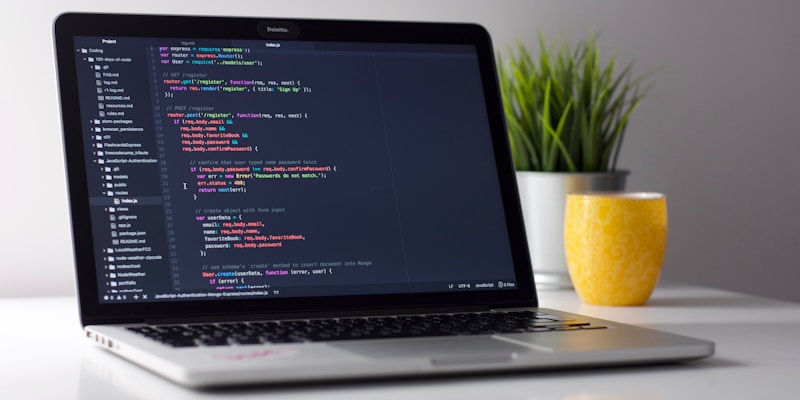
The Great RAM Squeeze Is Making MacBooks Look Like a Bargain
Here's a twist nobody saw coming: AI is accidentally making Apple laptops a better deal.
The PC industry is in the middle of what some are calling "RAMageddon"—a DRAM shortage so severe that Dell's COO Jeff Clarke recently told investors he's "never seen memory-chip costs rise this fast." DDR5 contract prices have jumped 70-100% year over year. Dell and Lenovo have already announced 15-20% price hikes taking effect by January. And meanwhile, Apple is just... sitting there with stable prices and more RAM than before.
Why AI Ate Your Laptop's Memory Budget
The culprit is High Bandwidth Memory, or HBM—the specialized DRAM that powers AI accelerators. Here's the uncomfortable math: producing 1 bit of HBM requires roughly three times the wafer capacity of regular DDR5. The margins are also way better for memory makers, so Samsung, SK Hynix, and Micron have been quietly shifting production away from consumer memory toward feeding the insatiable appetite of data centers.
The result? A supply squeeze that analysts say could last until 2028.
PC manufacturers are now caught in an ugly position. They can raise prices, reduce specs, or eat the margins. Most are choosing some combination of the first two. TrendForce reports that Dell and Lenovo are considering downgrading mid-range laptops back to 8GB to keep base prices palatable. That's not a typo—8GB in 2026.
The Numbers Tell the Story
Look at where we're heading:
The Dell XPS 13 starts at around $1,725 CAD today. With the announced 15-20% increases, you're looking at roughly $1,980-$2,000 by early 2026. And that's before you upgrade anything.
The MacBook Air M4 launched in March at $999 USD—actually $100 less than the M3 model—with 16GB of RAM standard. In Canada, that's $1,399. Apple hasn't announced any price increases.
So by early 2026, you could be paying $600+ more for a Dell that starts with the same RAM as the MacBook. And if you want 32GB on that Dell? Internal memos show surcharges of $130-230 just for that upgrade.
Apple's Unfair Advantage
Apple doesn't buy memory the way everyone else does. Their long-term supply contracts were locked in when prices were lower, and their unified memory architecture means they need less RAM to achieve the same effective performance anyway. When Apple moved from 8GB to 16GB as the MacBook Air standard, they absorbed the cost and actually dropped the price.
That's not generosity—it's leverage. Apple moves enough volume that suppliers can't afford to squeeze them the way they're squeezing smaller PC OEMs.
The practical upshot is wild. A base MacBook Air now includes:
- M4 chip with 10-core CPU
- 16GB unified memory
- 256GB SSD
- 18 hours of battery life
For $1,399 CAD. Meanwhile, Framework—who makes modular laptops specifically designed for upgradability—just raised their RAM prices and implemented purchase limits because they literally can't get enough stock.
Should You Actually Buy a Mac?
Look, I'm not saying everyone should rush out and switch ecosystems. macOS isn't for everyone, and if your workflow depends on Windows-specific software, the value calculation changes.
But if you're platform-agnostic? If you just need a laptop that handles everyday work, doesn't choke on a dozen browser tabs, and won't feel underpowered in two years? The math has shifted hard in Apple's direction.
The days of MacBooks being the "expensive option" are ending—not because Apple got cheaper, but because everyone else got more expensive. When a $1,400 laptop with 16GB of RAM is competing against $2,000+ Windows machines that might ship with 8GB, the value proposition writes itself.
The Uncomfortable Timeline
SK Hynix's internal analysis suggests this shortage runs through 2028. That's not a typo either. Memory makers are building new fabs, but capacity takes years to come online, and AI demand isn't slowing down.
If you're thinking about a laptop purchase, the window to get pre-hike pricing on Windows machines is closing fast. Lenovo's current quotes expire January 1st. Dell's increases are already rolling out.
Or you could just buy a MacBook Air. For once, that's the budget-conscious choice.
The irony isn't lost on me: the same AI hype that's supposed to make our computers smarter is making them more expensive. At least Apple saw it coming.